Our Stories
Our Voices
Paid Family and Medical Leave
Staff Stories
The Difference time makes
June 2, 2026
In part one, we recapped the first half of our intergenerational advocacy day, sharing the highlights of us coming together in joy, connecting with legislators, and living our mission to center young people in change. Let’s dive back into the power and energy of Voices’ Intergenerational Press Conference.
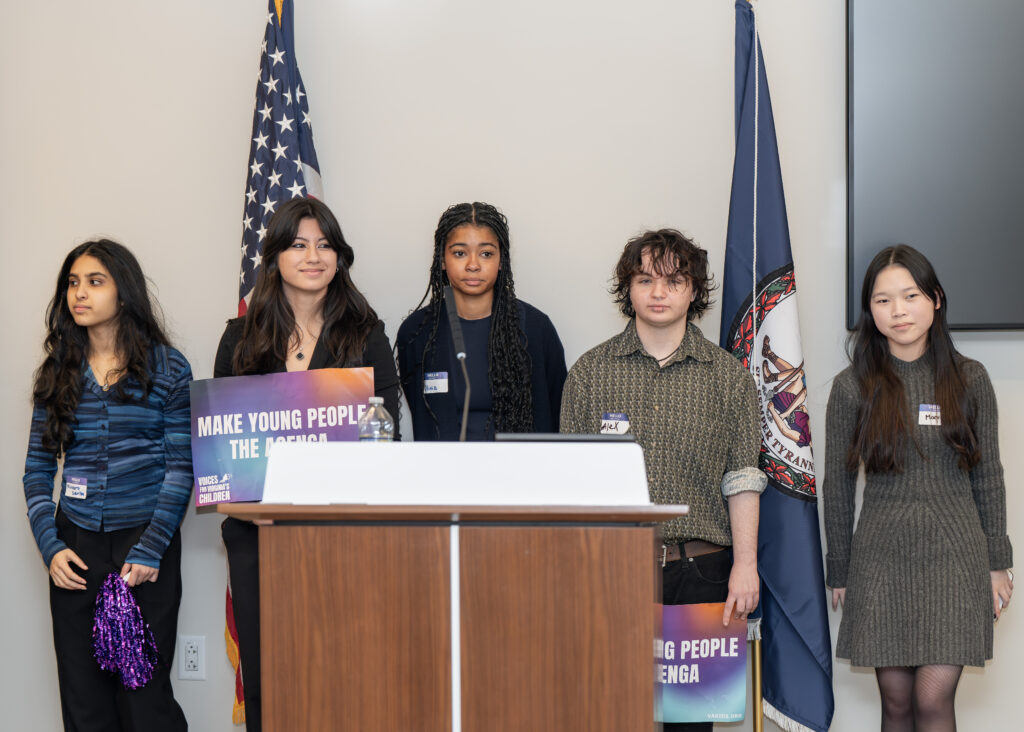
11:00 AM. General Assembly Building, Senate Press Room
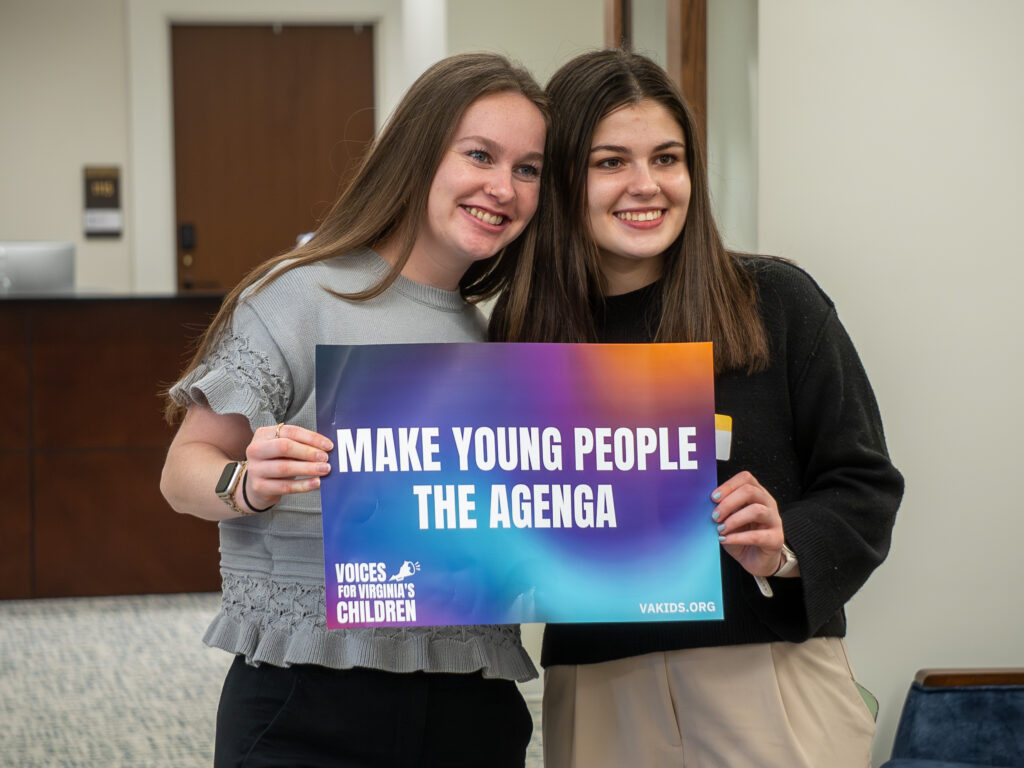
If you attend an intergenerational press conference led by Voices, you will see that youth voices aren’t an add-on, they are woven into the heart of the program. Young people share the stage and the microphone with adults who trust, uplift, and validate their stories, their solutions, and their message that young people must be made the agenda in all systems that impact them. This is not just a symbolic moment with young advocates standing beside legislators for a photo op, this is a living, breathing reflection of our belief that young people belong at the center of policy decisions that shape their lives.
“Listening to children is very important. They know what they feel, they know what is hurting them, and they know how to improve their lives,” said Senator Barbara Favola (D 40), long-standing legislative champion for youth and family issues in Virginia and the opener to our intergenerational press conference. As the chair of the Virginia Commission on Youth, Senator Favola has dedicated her legislative career to listening to young people, improving outcomes for youth navigating multiple, interconnecting systems such as social services, juvenile justice, and mental health, while also fighting to ensure families have every opportunity to stay together when encountering child protective services and the child welfare system.
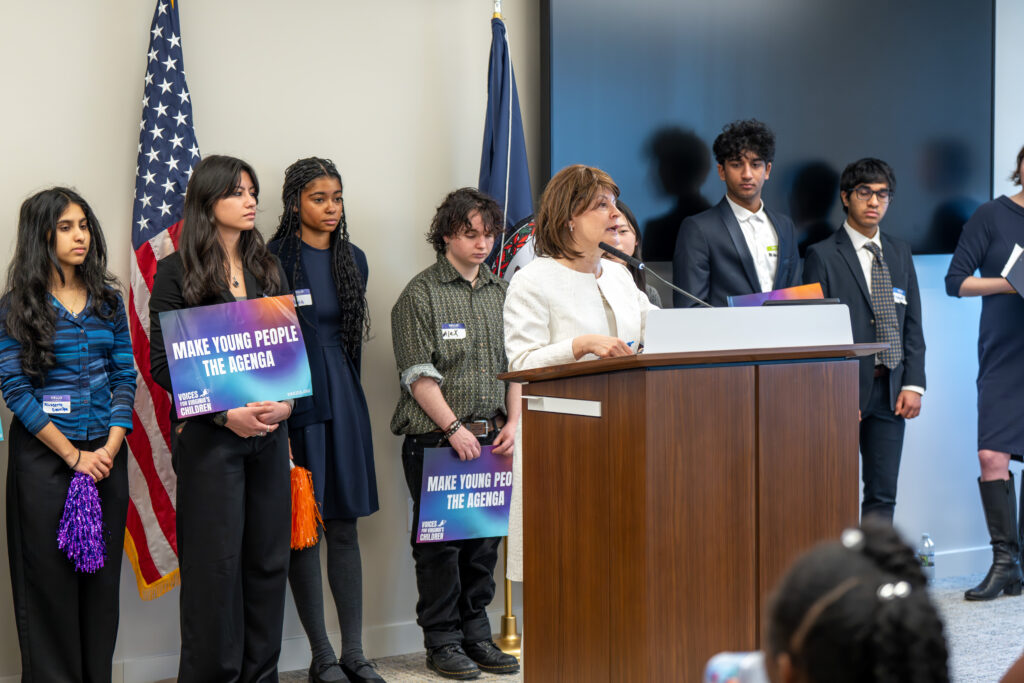
In the policy and advocacy space, listening to and partnering with young people is becoming more widely recognized as best practice. We know that building a bright, equitable, and joyful future for young people requires young people’s expertise infused in the blueprints, the materials we choose, and the placing of the bricks. Unfortunately, even with us knowing that listening to young people is important and that they know what they need to improve their lives, we still do not afford them that opportunity in most systems that impact them, such as the child welfare system.
Senator Favola has worked hard to continue to build pathways for young people navigating the child welfare system to be heard and supported. The Office of the Children’s Ombudsman was established just a few years ago to do just that. “[This office] exists to make sure concerns about how children are treated in our systems are taken seriously — and to help identify problems before they become tragedies,” said Senator Favola. This year, she is working to continue to expand the powers and duties of the Office of the Children’s Ombudsman and strengthen the Office’s ability to investigate complaints from young people themselves with her bill SB 125.
“It is also important that youth have some place to go when a system is not working,” said Senator Favola. It is not enough to just say listening to youth is important, we must continue to create pathways, space, and access for them to speak up when they need to.
Senator Lashrecse Aird (D 63), a legislative champion for Virginia’s youth and families and mom of two boys, thanked our young people for taking their day off school to come and speak directly to her and her colleagues sharing that “there is no greater voice than young people’s voices directly.”
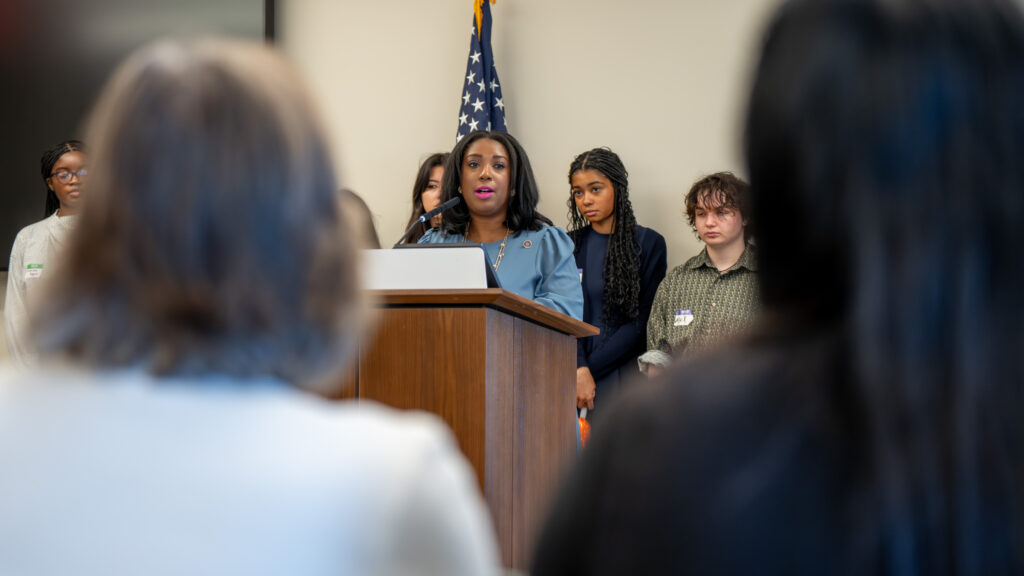
As a mom of a 6th and 8th grader, Senator Aird understands the importance of families having access to programs such as early childcare to support the wellbeing and futures of their children. “Caring for Virginia’s children means making sure also that parents and families have the support that they need,” she said. “[And] this session making childcare more accessible and affordable is a top priority.”
As a working mother, she relied on childcare when her boys were younger and had to navigate the same impossible financial decisions that so many parents have due to lack of access to quality and affordable childcare. The Senate Democratic caucus is committed to investing in the early education system this year through her bill SB 3 and a package of early care and education legislation. “We are saying, we value our working families and working parents and we value the need for our children to be in a safe learning environment.”
“Our youth are our future and by investing in them we will secure them a brighter future and a healthier Virginia,” said Vanessa Agyei, a third-year undergrad student at the University of Virginia and a member of the 2025 Virginia’s Youth in Action cohort. We invest in our youth by investing in their families through economic security programs and providing accessible early childcare and education. We invest in our youth by creating opportunities for them to speak up when navigating systems like the child welfare system or their own education.
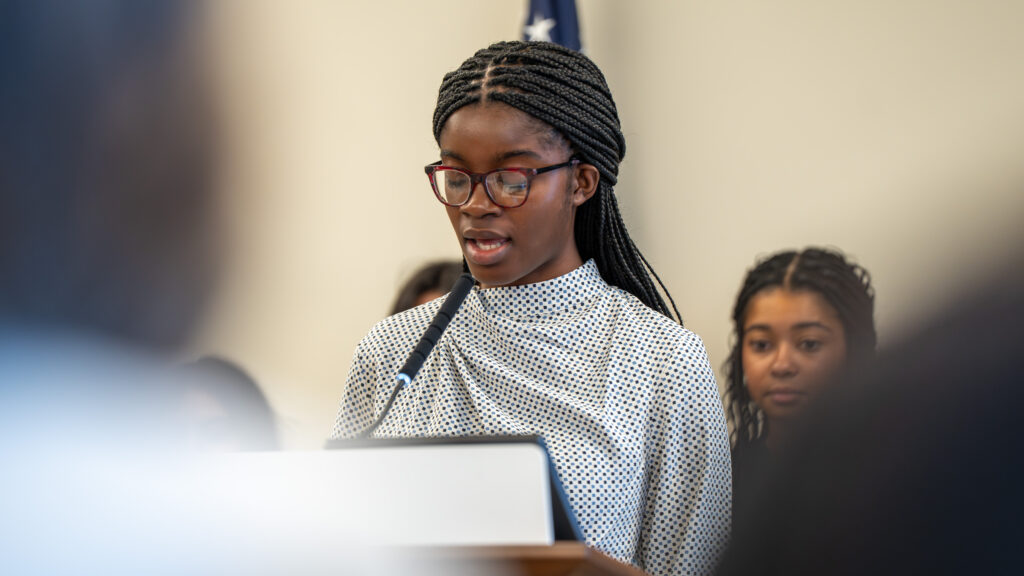
Vanessa shared her excitement and pride in being able to speak on the importance of investing in the education of first-generation, low-income students of color, specifically those seeking to join our healthcare workforce via the creation of educational pipeline programs that begin in high school and follow them all the way into their careers:
“Nervously, I looked around the classroom as we prepared to begin our mocktails and medicine event, designed to foster community and mentorship among Black female pre-med students. My anxiousness was replaced by delight as I realized just how many girls came to interact with us and learn from us. In my group there was a
second-year student who was pursuing a career as a physician’s associate and a first year who was pursuing a career as a physician. I noticed the first year was hesitant to ask questions. In her, I saw the younger Vanessa trying to establish her footing and make her mark at a large school. As a first-generation student myself, I am intentional about being transparent about my journey and mentoring the up-and-coming generation of health care leaders, especially first-generation, low-income students of color. Why? Because we often experience heightened imposter syndrome preventing us from applying to opportunities that we are overqualified for.”
Vanessa shared that she was lucky to have had access to the summer medical leadership program at her high school, “I wouldn’t have known how costly it was to apply to medical school or just how intensive the medical school application process is. Additionally, there is a hidden curriculum to navigating the professional realm especially when it comes to building social capital, establishing a professional brand, and knowing how to strategically navigate application processes.”
Vanessa is committed to seeing that careers in healthcare become more accessible for first-gen, low-income students of color. She wants to urge decision makers to consider creating a statewide career pipeline program that will equip students with personalized mentorship, financial support, and early career exposure. “This longitudinal support will ensure that students’ visions turn into reality allowing us to have a growing workforce that honors the diversity in our experiences and our strengths.”
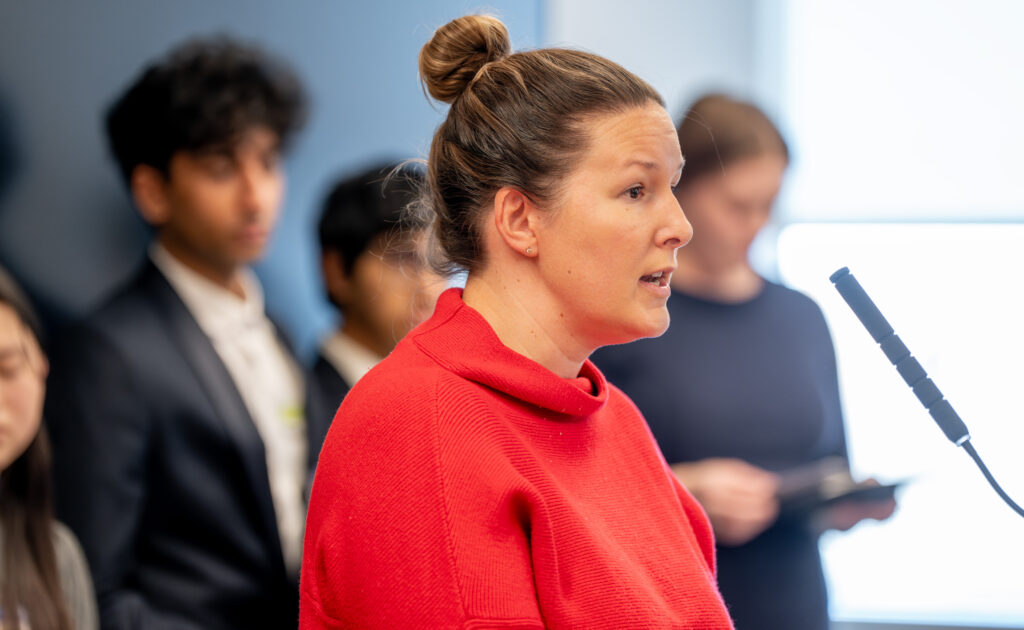
Our education system, workforce and infrastructure continue to face challenges Crystal Howser, Advocacy and Public Policy Lead for the Virginia Association for the Education of Young Children (VAAEYC) shared. “We cannot build a stronger workforce on the back of a fragile system” speaking to the early childhood education system specifically. As a teacher, a mother of a three-month-old and a lifelong advocate for the well-being of children, she sees and experiences directly the impact that a failing infrastructure has on children, young people, and families across Virginia. “This is not just an education issue,” Crystal stated. “It’s an infrastructure issue. Every bit as critical as roads, broadband and public utilities. Early childhood programs are the infrastructure that allows families to work, children to thrive and communities to prosper. Our children deserve a better system, not one that is pieced together year after year.”
We see so many systems that serve children and young people pieced together without holistic solutions that meet young people where they are and when they need services. John Richardson-Lauve, the Sr. Director of Community Outreach and Trauma-Informed Specialist at Saint Joseph’s Villa has direct experience working with youth navigating both crisis mental health needs and supporting prevention services with young people in schools – two sides of the same coin that are too often in competition when it comes to funding and priority at the state-level.
“At St. Joseph’s Villa one of the things that we do is provide services for youth mental health crises through a crisis continuum and we have the opportunity to prevent hospitalization and emergency room visits by providing this crisis continuum. This year in the General Assembly we have the opportunity to fund prevention work particularly in schools and standing up school mental health in a more meaningful way across the commonwealth.”
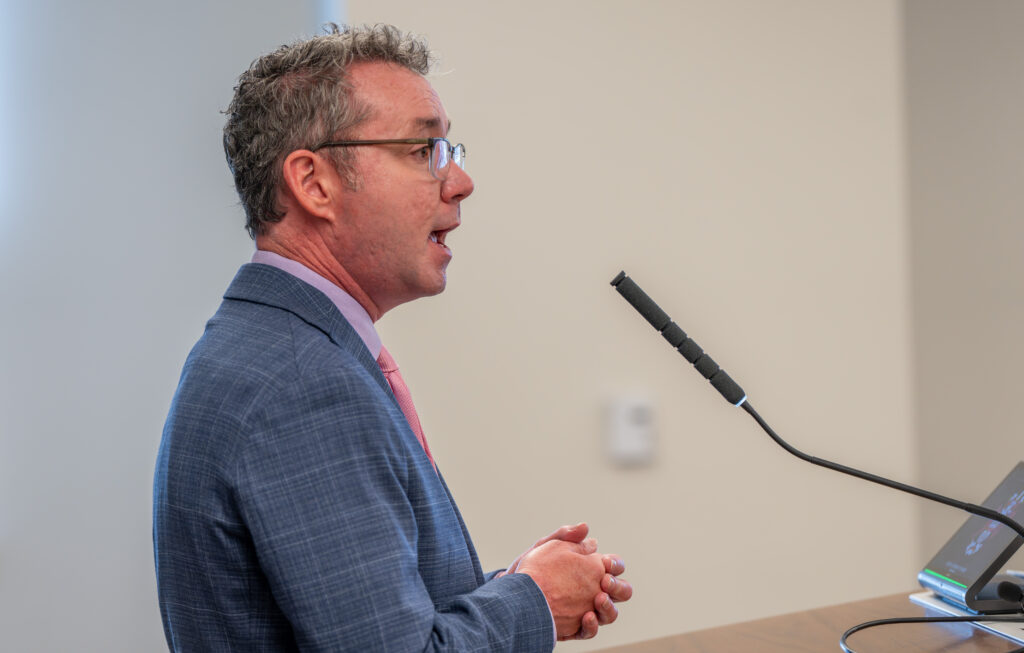
John shared that he spent 10 years as an outpatient mental health director at a different nonprofit in Richmond known for being some of the first to support the implementation of school-based mental health across the region. “There is this golden opportunity to reach kids where they’re at for the majority of their day and week,” said John. “To be able to have these points of insertion, to have intervention there in the schools, to identify, treat, and resolve mental health concerns when they exist; it’s a wonderful opportunity which is severely underfunded.”
A long-term advocate for culturally responsive care, John uplifted Vanessa’s solution to ensuring our workforce is diverse and culturally appropriate. “Our kids should be able to look at their provider and say ‘Hey, you look like me. Maybe, you can help me.’”
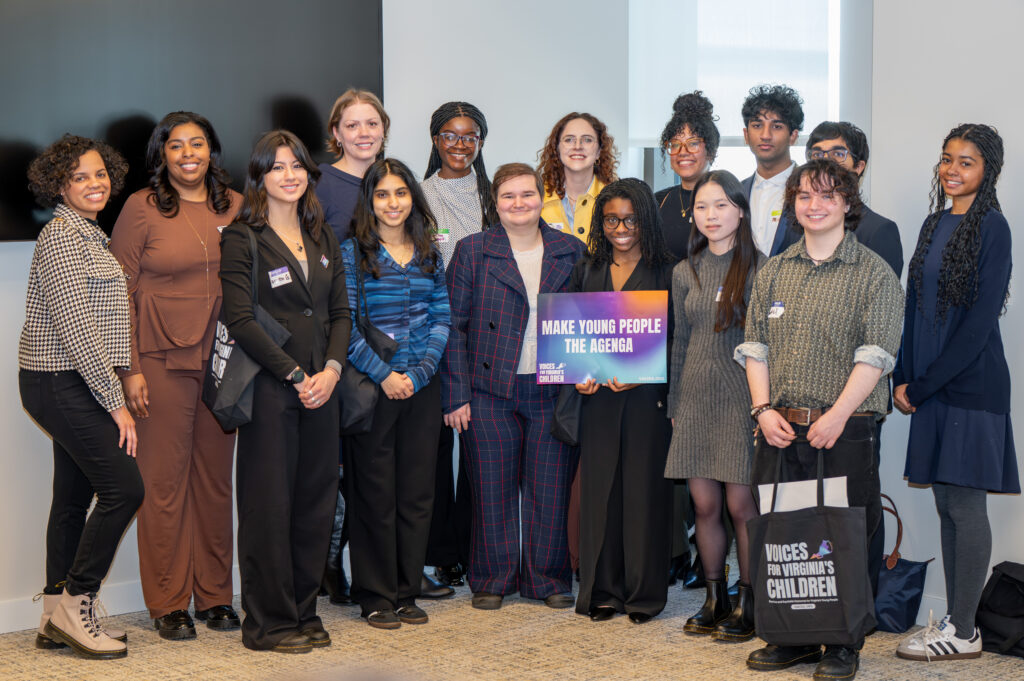
Cat Atkinson, social worker and Director of Engagement at Voices for Virginia’s Children, resonates with the importance of young people having access to providers and systems that represent them – in identity, experience, and in how systems grow and improve. Closing out the press conference, Cat highlighted the pride and power of working directly with Virginia’s Youth in Action. “It is truly an honor to work alongside the remarkable young people standing with us today,” Cat shared. “Virginia’s Youth in Action, or VAYA, was created because at Voices, we believe deeply in the limitless potential of young people, and because we trust them as experts in their own lives and in what they need to thrive.”
Cat leads the Virginia’s Youth in Action program as well as Voices’ intergenerational strategy, seeking to identify more ways to intentionally and sustainably embed young people into the daily work of Voices. “Now more than ever,” she said, “we must embrace an intergenerational, human-centered approach to policymaking and systems change, one that honors the wisdom of those who came before us and centers the voices of young people who will live with these decisions the longest.”
At Voices, we recognize that when a policy or system fails a child, it strains an entire family and when families struggle, communities feel the impact for generations. We have heard that young people dream of a Virginia where they can thrive, they can live joyfully and safely, with health, wealth, and no worries about tomorrow. Our young people continue to live in radical hope, and it is through intergenerational partnership, shared power, and collective action that we can make real the Virginia its young people dream of and hope for.
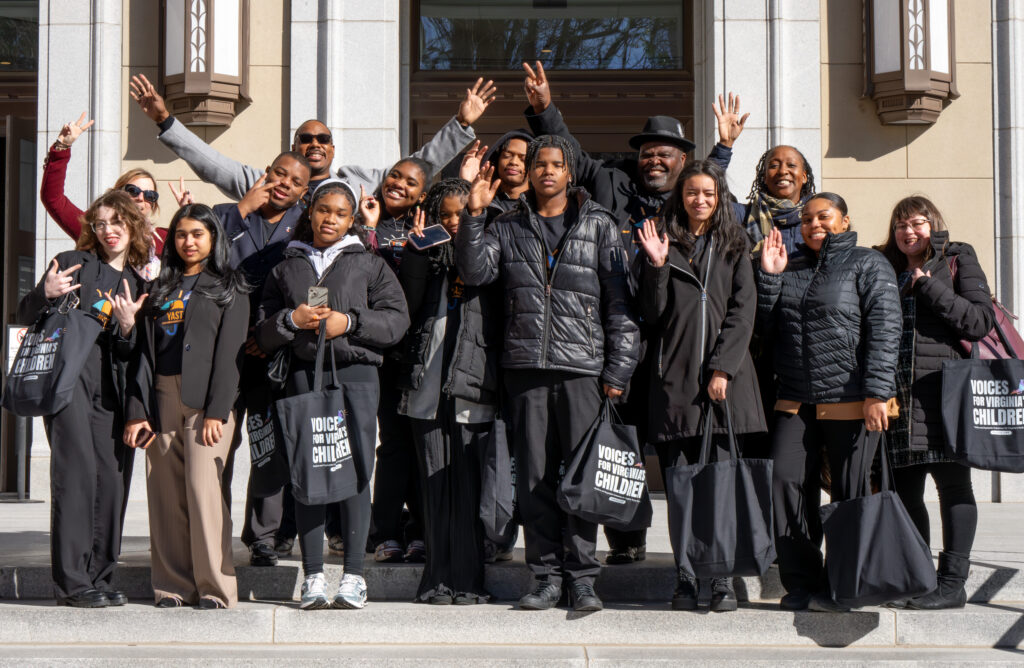
1PM. Red Bird Social.
After a day of advocacy and storytelling, our intergenerational group was ready for a good meal and a good nap. Coming back together as a community at the end of the day, we celebrated the highlights of our work, connected as people on moments of joy, and leaned on one another as we recognized how much work we still must do – but now with radical dreaming, radical hope, and in radical intergenerational community.
As the day wound down and people drifted back to offices, homes, and neighborhoods, something electric still hummed between us. We had arrived at 7:30AM as individuals, spanning generations and stories to speak up for Virginia’s young people, families, and providers. We left at 1:30PM as something more: an intergenerational community bound to one another and to the work ahead. Connected across issues, across ages, and across every corner of the commonwealth, we carry forward a shared commitment to build a brighter, more just, and joyful future for Virginia’s young people.
Stay Connected
Do you want to join us for future Advocacy Days like this or just stay connected to other advocacy opportunities? Sign up for Voices Action Wednesday emails to receive updates! Whether you are a first-time advocate or an established storyteller – this email is your gateway to hearing stories from community members, acting on youth and family issues, and sharing your stories to enact change in Virginia.

June 2, 2026

March 12, 2026
March 12, 2026
March 5, 2026